Showing posts with label Spring. Show all posts

Sunday, 1 March 2015

Yellow carpet in the city

I was browsing through my old photos before I stumbled upon this set of photos which I have taken 3years ago, but never had the time to write about it. Looking at these photos made me feel lucky that I stay in Japan and that I am able to experience all of these beautiful scenery in Japan. I realised that this post might be a bit early, but consider it as a teaser on what to expect in the spring if you are in Tokyo. 

Located at the mouth of the Sumida River, Hamarikyu Garden was once a feudal lord's residence during the Edo Period (1603-1867). During the same time, the garden was also used as a duck hunting ground. For a while, the garden served as a strolling garden and as an imperial detached palace. Today, it is a public park surrounded by skyscrapers with ducks swimming peacefully in the pond of the Hamarikyu Garden.

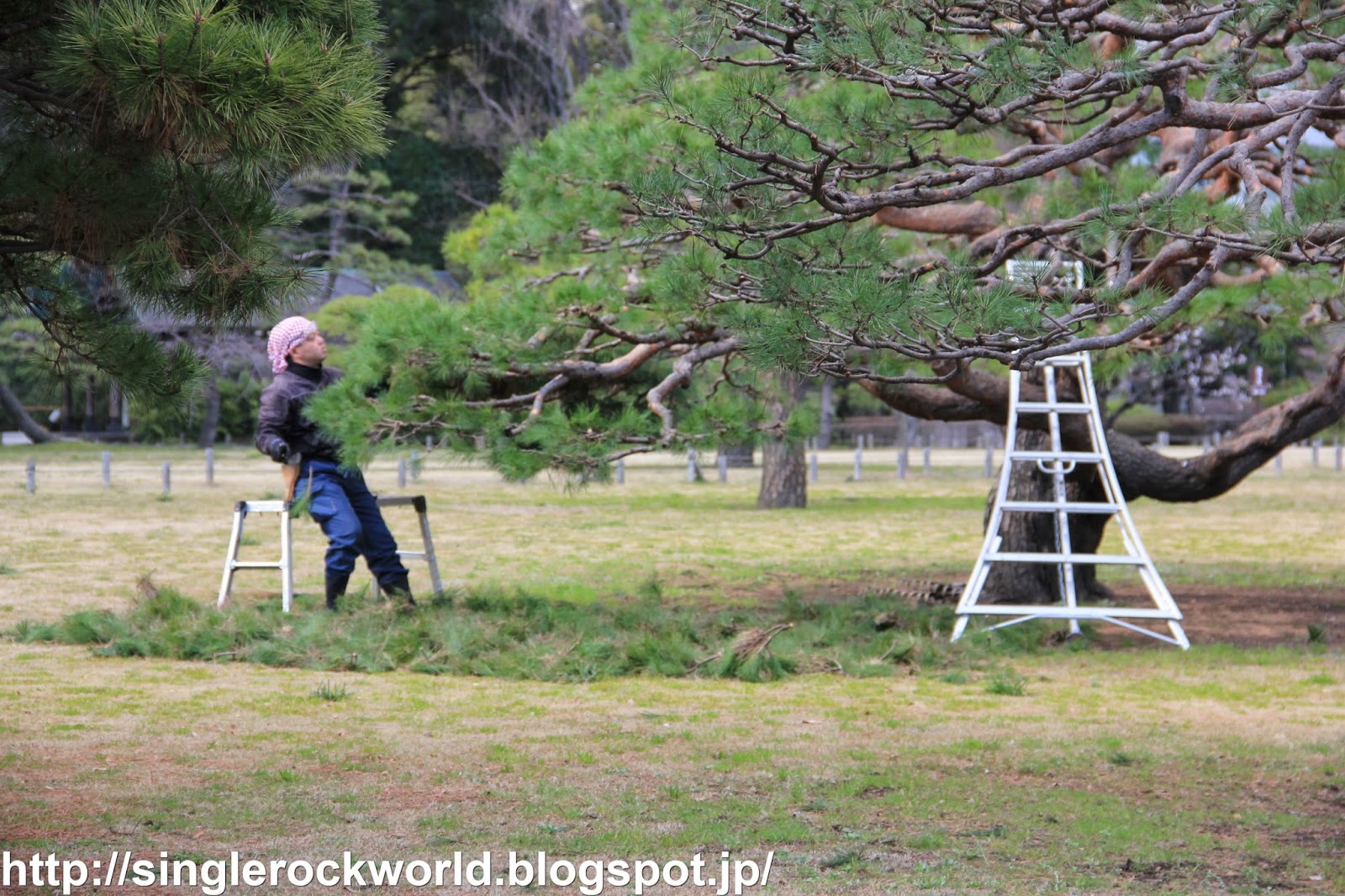

You can still witness the surviving structures from its multiple roles over the centuries, such as the old moat wall, the preserved duck blinds, the wooden bridge and a traditional Japanese tea house. The landscape of the garden evolves around the Shioiri Pond while the whole garden is surrounded by a seawater moat. 

Events are held regularly, such as the Japanese falconry during the New Year and the annual Tokyo Grand Tea Ceremony. However, you don't have to wait for the annual Tea Ceremony as you can also enjoy the tea ceremony for 500yen at the teahouse, Nakajima no-ochaya.

Another cool thing you can do in this garden is to rent for free their excellent English audio guide service from the ticket office. If you are a history buff, then, you should rent this audio guide. In this audio guide, you can self-guided to the walking courses around the garden. Each walking course lasts around 60-90minutes and you will learn about the history, the historical spots and the flora (not so much on the fauna except for the ducks). 

In March, a field of rapeseed flower or in Japanese, it's called the nanohana (菜の花) provides a carpet of yellow colour that contrasts beautifully with the skyscraper in the background. It is a view that you won't find anywhere else in the city.


To me, Hamarikyu Garden is a beautiful garden to go to in any season, but the seasonal flower makes the garden even more spectacular. The best time to view the rapeseed flowers is between the second and third week of March. 

This is the best place in Tokyo to view this magnificent rapeseed flower. The other great place to bask yourself in a field of yellow rapeseed flower would be the Showa Kinen Park.

rapeseed-flower

How to get there
The Hamarikyu Garden is a 10-15 minute walk from JR Shimbashi Station. Or alternatively, you can get to the park from Shiodome Station serviced by the Oedo Subway Line and the Yurikamome Line for a 5-10 minute walk.
If you want to get to the garden in a unique way, you can take a boat ride from Asakusa to Hamarikyu Garden on the Tokyo Water Bus (水上バス, Suijō Basu). This is one of the gardens in Tokyo you can access by the waterway. The journey by the water bus is only 35 minutes and 740 yen per way. The admission to the garden has to be paid separately. Please note that to return to Asakusa from Hamarikyu Garden, you will have to make a small detour and the journey is 10mins extra.

The waterbus
Opening Hours and Admission Fees
Hours: 9:00 to 17:00 (entry until 16:30)
Closed: December 29 to January 1
Admission: 300 yen

Location and Website
1-1, Hama Rikyu-teien, Chuo-ku, Tokyo 104-0046
http://teien.tokyo-park.or.jp/en/hama-rikyu/ (in English)

So, instead of pink, how about starting the spring with yellow? 


Wednesday, 2 July 2014

Beautiful Rain

When June comes around, we in Japan, equipped ourselves with umbrellas, raincoats and perhaps even consider buying a pair of rain boots. Why? Because June is the start of the rainy season known as tsuyu (梅雨) in Japan and it is a one and half month of rainy days that is the reason why we prepare all our rain gear. But we also associate this rainy season with a flower that looks absolutely beautiful when wet. It is the hydrangea or also is called Ajisai, 紫陽花, in Japanese which happen to bloom around the same time.


I believe you already know that the colours of the petals can be manipulated by a change in the chemical make-up of the soil (Anyone inspiring to be a chemist + botanist?) and the colour of the flowers grows more vibrant as they get more rain water that falls on them through this rainy season. Although Ajisai is thought to symbolize heartfelt feelings, however, in Japanese art and poetry, Ajisai was chosen to represent fickleness and changing heart due to their ability to change colours.

One of the commonest plants in Japan, the Ajisai can be found anywhere as you look around in Tokyo. During this time too, the famous Ajisai temples such as the Meigetsu Temple, Hasedera and many others in Kamakura becomes unusually busy and crowded. You may have to wait in line and take a number to get in. Yes, it is THAT crowded. You can read it here.

But today, I am going to introduce to you a relatively secluded Ajisai garden in the mountains. If you go at the right time, you can even capture the flowers enshrouded in mist as featured. I was hoping to capture this mood, but I didn’t have that luck so far (yes, this is the only time I wished it would rain!).

Flowers in the misty Minami-zawa Ajisai Yama.
From http://www.earth-garden.jp/community/12457/
Ajisai enshrouded in the mist.  (I am sorry I cannot find the source for this photo).
The secluded Ajisai garden in the mountains is known as the Minami-zawa Ajisai Yama (南沢あじさい山) and it is located in the Arukino city (あきる野市), Tokyo.

Empty walkways

Completely surrounded by flowers
Minami-zawa Ajisai Yama is a 30-years labourized private garden by Mr Minami-zawa. He tended the garden and planted 10,000 Ajisai plant on this piece of land in the mountains.

A small donation of 300yen
You are able to find two different types of this flower at the Minami-zawa Ajisai Yama. The first and most common type, the mop head Ajisai has large round flower heads resembling a pom-pom or the head of a mop. I like this type the most as they reminded me of the make-up powder puffs. The other is called a lace cap and has round, flat flower heads with a centre core of young flowers surrounded by outer rings of individual bloomed flowers.


Love the little creatures on the flower

I so envy you, little fella. Can I stay with you?

To get to Minami-zawa Ajisai Yama by train, you have to take the JR Itsukaichi Line  (JR五日市線) to Musashi Itsukaichi station (武蔵五日市駅). My trip starts from Shinjuku station. I took the JR Chuo Line on a rapid train service with two changes of trains. One is at the Tachikawa station (立川駅) to the local train on the JR Ome Line (JR青梅線) heading towards the Musashi Itsukaichi station (武蔵五日市駅). The next train change is at Hajima station (拝島駅) for the JR Itsukaichi Line (JR五日市線). Musashi Itsukaichi station (武蔵五日市駅) is the last stop for JR Itsukaichi Line (JR五日市線). The whole journey takes about 70mins and the train ride from Shinjuku to Itsukaichi station costs about ¥800 per way.

From the Musashi Itsukaichi station, the walk is about 40mins and it is well marked with a cute man signpost. Please note that there is no service bus to get there.

The cute man signpost


As I could't get my map to work, I am going to refer you to this map by a blog maintained by the Itsukaichi city which I also put it up in this post.

From http://itsukaichi.seesaa.net/article/4591138.html
The best time to go to this garden is between mid-June till mid-July.  When I was there on 27th June 2014, the flowers have blossomed into vibrant and plump rounded bunches of different colours as white, pink, purple and blue. I believe you are still able to view these beautiful blooms within this week.

One word of caution: Do not attempt to wear your nice shoes (read: heels) when you visit this place. Wear proper boots as it can be pretty muddy, especially after a shower of rain!

Ajisai by the river
Ajisai swaying in the mountain breeze


Monday, 23 June 2014

Japan's secret garden

We are now mid-way through the rainy Season in Japan. It started with a bang this year. I have never seen it rain like this before. Almost a whole week of rain non-stop as though that the rain wants to make not only an announcement, but an announcement with a big exclamation mark. (For those who are travelling to Japan, please note that the rainy season starts sometime from June to the middle of July every year).

To tell the truth, I am not a fan of rain and especially the hot and humid wetness that comes with the rainy season. Plus, it makes the flowers I am planning to photograph look less spectacular.

But there is one activity that I like to do whenever it rains, nap. This is a much needed luxury as for the past six months, my life is taking some small changes.

For a start, I had to get a new laptop. My old one got fried after my constant abuse that comes with my tech-norance. I am still in the stage of getting to know my laptop (it's Windows 8 and I am old-fashioned) and half-speed with it.

Then, I moved to a bigger apartment. Not just a bigger apartment but also, brighter and on higher floor. But the search for this place has been taxing. I have done house-hunting with many housing agents over 3 months before I decided this is the one and the work paid off. I loved it! The size is what I craved for after all those years living in a small apartment in Tokyo. And it comes with a balcony that allows me another small luxury - to plant some herbs and other plants.

After 2 months of tender, loving care (yes, I meant it with a pun!), I am happy to see some recent sprouts (I may have an avocado tree soon!!! *Happy shriek!!!*) and feeling proud that I didn't 'murder' any plants so far. I love gazing at them. Sometimes for hours. And I think they have been given some much attention that I am neglecting my other activities such as going out to photograph new flower spots and blogging. I will blog on my plants another time (Can't help but to share with you my proudest moment *beaming*)

Well, I am here to give you a very exclusive article on a relatively unknown flower spot in Japan. I know it is a 'secret' flower spot because the significant lack of foreigners and the people who visited this place are the old Japanese obasan and ojisan. I didn't even meet any Japanese or foreigner my age or younger. Not this time for this trip. And if you are staying in Tokyo, this place is easily accessible with a train that takes no longer than 2-hours ride *wink wink*.

Right... First, please enjoy the photos. May I present you, *drum roll* Ms Japonica Primula from Japan!!!


Ms Japonica Primula is also known as Ms Japanese Primrose or Kurinso (クリンソウ) in Japanese.

Her favourite colours ranging from white to red.

She loves being in a shady spot with lots of moisture, especially near a stream or river.

Best time to see her is from early June till mid-June.


To see this beautiful lady, make your way to Tobu-Nikko station or JR Nikko station visit her at Senjugahama  (千手ヶ浜).


As there are several ways to get to Senjugahama, I am going to list the most flexible, the most convenient and the fastest way.

The most flexible (if you are not rushing for time. It takes roughly about 1.5hours of transportation time excluding waiting time to get to Senjugahama).
Upon arrival at either train station, board the Tobu Bus (東武バス) heading to Yumoto Onsen (湯元温泉行) and stop at Akanuma (赤沼) bus stop for one hour or so. From Akanuma bus stop, you can either walk (I am guessing 1.5hours or so) or take the low-emission hybrid bus (低公害バス) from Akanuma Shako bus stop (赤沼車庫バス停) to Senjugahama bus stop (千手ヶ浜バス停) for another 30mins and then, from the Senjugahama bus stop, you walk 15mins to this place called Senjugahama (千手ヶ浜). It is also the last stop for the bus. Please remember to prepare the exact change (\300 per person per way) for the bus.

The most convenient (with the least transfers)
Alternatively, you can board the Tobu Bus (東武バス) heading to Yumoto Onsen (湯元温泉) and stop at Yuransen Hacyakusho (遊覧船発着所) bus stop. After that, walk towards the pier and board Chuzenji -ko Cruise that is heading towards Senjugahama (千手ヶ浜) for 40mins. Be careful with the timing for the cruise - there is only one departure from this pier and that is at 12:30pm.

The fastest (with the least transfers and more option for the cruise departures)
However, if you are able to make it to the Shobugahama pier (菖蒲ケ浜) then, there three departures from there at 13:00, 14:00 and 15:00. From Shobugahama pier, it is only 15mins cruise to Senjugahama.

You can get the timetable for the bus at Tobu-Nikko website, the low-emission hybrid bus website and the Chuzenji-ko cruise website (all of it in Japanese).

If you do visit them, please share with me your beautiful photos. I love to hear from you ❤ Meantime, enjoy these photos!


Sunday, 5 May 2013

Cascading beauty

Don't you ever wished that some movie scenes can be real? Walking in the wisteria garden of a certain flower park reminded me of one such scene. The good thing is you can actually experience this same magic as I did at the Ashikaga Flower Park in Tochigi-ken. The garden is located in the city of Ashikaga, which is appromimately 70mins train ride from Tokyo. To get there. take the Ryomo Express Train (特急りょうもう号) from Asakusa (浅草) to Ashikaga-shi (足利市) on Tobu Isesaki Line (東武伊勢崎線). From the station, you can catch the shuttle bus to get to the flower park.


Like something out of a fairy tale or some sci-fi fantasy movie, this tree is really captivating. I am immediately and totally mesmerized by this tree. Especially at night, after the tree is being lighted up, the wisteria tree with its cascading blooms becomes surreal and makes anyone felt like they are under the illuminating Tree of Souls in the movie, Avatar.

See? It's really the Tree of Souls!!!
The wisteria tree has several different color of blooms; white, pink, purple and even yellow. Generally, the wisteria tree flowers from mid-April to mid-May.


I can't get enough pictures of this beautiful blooms that creates this ethereal atmosphere. One walk around the tree and you will understand why this tree is such a magical place for its viewers.


This park also has wisteria trees lined perfectly in rows, and its overwhelming abundance of flowers makes one feel like they are in paradise. Did I mentioned the fragrance of these flowers? Heavenly!


I bet a walk through the wisteria tunnel is enough to make you forget all your troubles.


Isn’t this just absolutely breathtakingly beautiful?


Related Posts Plugin for WordPress, Blogger...