Showing posts with label Garden. Show all posts

Sunday, 13 July 2014

Love-nder in Lake Kawaguchi

Just imagine a whole field of purple lavender with Mt Fuji in the background.


And just imagine the air smells so amazing that you feel like you are in the heavens.


All these imaginations are enough to persuade me to go to the heavily-touristed area of Lake Kawaguchi (河口湖) to photograph this amazing place myself.

I usually avoid the tourist spots but this time, I cannot miss this wonderful and beautiful flower spot no matter how touristy the spot is. Just to make myself clear here - I avoided the well established tourist spots not because of the tourists, but rather, to avoid the pressure of taking the easy but more expensive way to travel.

Anyway, that amazing flower spot that I am talking about is the Oishi Park (大石公園) and from mid-June to mid-Jul, this park is full of blooming purple lavender.


And when you reach the Oishi Park, the place is filled with this an amazing lavender scent in the air. I have never smelled anything more wonderful than this. All this makes me want to visit the lavender fields in Provence.


To get to Lake Kawaguchi from Shinjuku, you can take the highway bus from the Shinjuku highway bus terminal to Kawaguchiko station for 1,750yen. The journey should take about 1hour 45mins if there is no delay.

If you have JR pass, you can board the train on Chuo-line at the JR Shinjuku station to the JR Otsuki station and change to Fujikyu line with the train heading to Kawaguchiko station. The train fare should be an additional of 1,140yen. The whole journey is about 2hours if you are taking the train.

It is relatively easy to get to the Oishi Park with the retro bus on the Red Line from the JR Kawaguchiko station. From the JR Kawaguchiko station, it is just about 20mins ride and the stop for Oishi Park is at Kawaguchiko Natural Living Center bus station (河口湖自然生活館).

Although I did not manage to find out how much it costs to go from JR Kawaguchiko station to Oishi Park but I believe it should be around 400-500yen per way (I was persuaded to get the two-days area pass for 1,300yen as I was making a few stops along the way). So if you are only visiting one place in the area, then, you probably won't need the two-days area pass, but if you are planning to make a few stops like I did, then, it is advisable to get the pass as the bus fare retro bus is not cheap.

I was told that there is also a local bus which is cheaper but the information for the local bus is also harder to get. As this trip wasn't planned (it is one of my random trips again), I didn't have enough time to search for the information and I am still trying to find the timetable for the local bus online. If I can find it, I will share it online ^^.

You can also rent a bicycle from the JR Kawaguchiko station and it should cost you about 600yen per hour or 2,600yen per day. But if you are staying in a hostel or some accommodation in Lake Kawaguchi, just ask if there is any discount. You can probably get a bicycle for 1,000yen for a whole day.

I think it is an amazing experience to cycle among the flowers
Although Lake Kawaguchi or Kawaguchiko area is a beautiful area with a really nice lake, but it is also a well-established tourist spot. It is a great place for anyone who can't speak or read Japanese because this area is easily navigable with lots of English maps, signboards and buses with drivers who can speak passable English.

All said, the Oishi Park is still worth a visit and you will probably never regret spending one good afternoon with the sweet-smelling lavender. I believe the lavender is still good till next week. Enjoy the photos!


Tuesday, 8 July 2014

5 ways to enjoy Tokyo on a rainy day

What do you do when it rains in your city on the weekend? Do you do the same thing as me - stay at home and watch tv?

For me, I almost always unhappy to see dark skies hanging over the horizon, threatening to pour on us, poor humans. So there are days that I didn't want to leave my apartment because the skies looked slightly dark... During the rainy season, sometimes, the only time that I would agree to come out is to make an appointment that I cannot miss. Or else, I am determined to stay indoors for days until it clears up.

But of course, I know I can't hide in my apartment whenever it rains, so I decided to take a proactive approach - to go out anyway. But not without some preparations.

To encourage myself to go out on a rainy day, I bought a new (cute ^^) rain boots, flowery (think Cath Kidston) raincoat and an orange polka dot umbrella! All the happiest colours I can find in the rain gear section to tackle the rainy day! If you see a lady decked-in colourful, flowery raincoat with an orange polka dot umbrella, that might be me ^^.

But I also hate to walk in the rain, so where is good to go on a rainy day, I asked myself. So then, I came up with this list - 5 ways to enjoy Tokyo on a rainy day.

1. Visit a hydrangea garden
The best time to photograph the hydrangea is when it is raining. They looked so right with the raindrops on them. I find that photographing hydrangea in the rain is a perfect motivation for me on a rainy day.


2. Visit an aquarium
After one experience trying to avoid the typhoon in Tokyo, I decided that visiting an aquarium is probably one of the best ways to stay out of the rain and enjoy yourself at the same time.


3. Bring your favourite book and go to the coffee shop at the Tokyo Tower
The view may not be so much from the top of the Tokyo Tower during the rainy days, but at least, it keeps you dry and you can enjoy a cup of coffee while reading your book.


4. Visit museums or learn about beer-making at the Ebisu Beer Museum in Ebisu station
I decided that the beer museum is good for rainy days when I got bored and just wanted to be outside of my apartment, but didn't want to get wet. In the beer museum, you can join their tour or buy beer and snacks to enjoy. I can assure you that you will feel so much better about the rain after a drink or two!


5. Visit an onsen (This is a suggestion from my friend, an onsen-lover)
I have not personally tried this one, but I hope to do so soon before the weather gets too hot and no, I don't want to dip in a hot spring in summer. My friend, K, told me that the best time to go to a popular onsen like the Oedo Onsen Monogatari is on a rainy day! She claims that after soaking in the hot spring, she felt so energized that no wet day is going to dampen her spirit! I am quite convinced actually. So, I am going to try it one of these days.
You can check out the website for Oedo Onsen Monogatari, which is available in English here.

What about you? What do you do to on a rainy day?

Wednesday, 2 July 2014

Beautiful Rain

When June comes around, we in Japan, equipped ourselves with umbrellas, raincoats and perhaps even consider buying a pair of rain boots. Why? Because June is the start of the rainy season known as tsuyu (梅雨) in Japan and it is a one and half month of rainy days that is the reason why we prepare all our rain gear. But we also associate this rainy season with a flower that looks absolutely beautiful when wet. It is the hydrangea or also is called Ajisai, 紫陽花, in Japanese which happen to bloom around the same time.


I believe you already know that the colours of the petals can be manipulated by a change in the chemical make-up of the soil (Anyone inspiring to be a chemist + botanist?) and the colour of the flowers grows more vibrant as they get more rain water that falls on them through this rainy season. Although Ajisai is thought to symbolize heartfelt feelings, however, in Japanese art and poetry, Ajisai was chosen to represent fickleness and changing heart due to their ability to change colours.

One of the commonest plants in Japan, the Ajisai can be found anywhere as you look around in Tokyo. During this time too, the famous Ajisai temples such as the Meigetsu Temple, Hasedera and many others in Kamakura becomes unusually busy and crowded. You may have to wait in line and take a number to get in. Yes, it is THAT crowded. You can read it here.

But today, I am going to introduce to you a relatively secluded Ajisai garden in the mountains. If you go at the right time, you can even capture the flowers enshrouded in mist as featured. I was hoping to capture this mood, but I didn’t have that luck so far (yes, this is the only time I wished it would rain!).

Flowers in the misty Minami-zawa Ajisai Yama.
From http://www.earth-garden.jp/community/12457/
Ajisai enshrouded in the mist.  (I am sorry I cannot find the source for this photo).
The secluded Ajisai garden in the mountains is known as the Minami-zawa Ajisai Yama (南沢あじさい山) and it is located in the Arukino city (あきる野市), Tokyo.

Empty walkways

Completely surrounded by flowers
Minami-zawa Ajisai Yama is a 30-years labourized private garden by Mr Minami-zawa. He tended the garden and planted 10,000 Ajisai plant on this piece of land in the mountains.

A small donation of 300yen
You are able to find two different types of this flower at the Minami-zawa Ajisai Yama. The first and most common type, the mop head Ajisai has large round flower heads resembling a pom-pom or the head of a mop. I like this type the most as they reminded me of the make-up powder puffs. The other is called a lace cap and has round, flat flower heads with a centre core of young flowers surrounded by outer rings of individual bloomed flowers.


Love the little creatures on the flower

I so envy you, little fella. Can I stay with you?

To get to Minami-zawa Ajisai Yama by train, you have to take the JR Itsukaichi Line  (JR五日市線) to Musashi Itsukaichi station (武蔵五日市駅). My trip starts from Shinjuku station. I took the JR Chuo Line on a rapid train service with two changes of trains. One is at the Tachikawa station (立川駅) to the local train on the JR Ome Line (JR青梅線) heading towards the Musashi Itsukaichi station (武蔵五日市駅). The next train change is at Hajima station (拝島駅) for the JR Itsukaichi Line (JR五日市線). Musashi Itsukaichi station (武蔵五日市駅) is the last stop for JR Itsukaichi Line (JR五日市線). The whole journey takes about 70mins and the train ride from Shinjuku to Itsukaichi station costs about ¥800 per way.

From the Musashi Itsukaichi station, the walk is about 40mins and it is well marked with a cute man signpost. Please note that there is no service bus to get there.

The cute man signpost


As I could't get my map to work, I am going to refer you to this map by a blog maintained by the Itsukaichi city which I also put it up in this post.

From http://itsukaichi.seesaa.net/article/4591138.html
The best time to go to this garden is between mid-June till mid-July.  When I was there on 27th June 2014, the flowers have blossomed into vibrant and plump rounded bunches of different colours as white, pink, purple and blue. I believe you are still able to view these beautiful blooms within this week.

One word of caution: Do not attempt to wear your nice shoes (read: heels) when you visit this place. Wear proper boots as it can be pretty muddy, especially after a shower of rain!

Ajisai by the river
Ajisai swaying in the mountain breeze


Monday, 23 June 2014

Japan's secret garden

We are now mid-way through the rainy Season in Japan. It started with a bang this year. I have never seen it rain like this before. Almost a whole week of rain non-stop as though that the rain wants to make not only an announcement, but an announcement with a big exclamation mark. (For those who are travelling to Japan, please note that the rainy season starts sometime from June to the middle of July every year).

To tell the truth, I am not a fan of rain and especially the hot and humid wetness that comes with the rainy season. Plus, it makes the flowers I am planning to photograph look less spectacular.

But there is one activity that I like to do whenever it rains, nap. This is a much needed luxury as for the past six months, my life is taking some small changes.

For a start, I had to get a new laptop. My old one got fried after my constant abuse that comes with my tech-norance. I am still in the stage of getting to know my laptop (it's Windows 8 and I am old-fashioned) and half-speed with it.

Then, I moved to a bigger apartment. Not just a bigger apartment but also, brighter and on higher floor. But the search for this place has been taxing. I have done house-hunting with many housing agents over 3 months before I decided this is the one and the work paid off. I loved it! The size is what I craved for after all those years living in a small apartment in Tokyo. And it comes with a balcony that allows me another small luxury - to plant some herbs and other plants.

After 2 months of tender, loving care (yes, I meant it with a pun!), I am happy to see some recent sprouts (I may have an avocado tree soon!!! *Happy shriek!!!*) and feeling proud that I didn't 'murder' any plants so far. I love gazing at them. Sometimes for hours. And I think they have been given some much attention that I am neglecting my other activities such as going out to photograph new flower spots and blogging. I will blog on my plants another time (Can't help but to share with you my proudest moment *beaming*)

Well, I am here to give you a very exclusive article on a relatively unknown flower spot in Japan. I know it is a 'secret' flower spot because the significant lack of foreigners and the people who visited this place are the old Japanese obasan and ojisan. I didn't even meet any Japanese or foreigner my age or younger. Not this time for this trip. And if you are staying in Tokyo, this place is easily accessible with a train that takes no longer than 2-hours ride *wink wink*.

Right... First, please enjoy the photos. May I present you, *drum roll* Ms Japonica Primula from Japan!!!


Ms Japonica Primula is also known as Ms Japanese Primrose or Kurinso (クリンソウ) in Japanese.

Her favourite colours ranging from white to red.

She loves being in a shady spot with lots of moisture, especially near a stream or river.

Best time to see her is from early June till mid-June.


To see this beautiful lady, make your way to Tobu-Nikko station or JR Nikko station visit her at Senjugahama  (千手ヶ浜).


As there are several ways to get to Senjugahama, I am going to list the most flexible, the most convenient and the fastest way.

The most flexible (if you are not rushing for time. It takes roughly about 1.5hours of transportation time excluding waiting time to get to Senjugahama).
Upon arrival at either train station, board the Tobu Bus (東武バス) heading to Yumoto Onsen (湯元温泉行) and stop at Akanuma (赤沼) bus stop for one hour or so. From Akanuma bus stop, you can either walk (I am guessing 1.5hours or so) or take the low-emission hybrid bus (低公害バス) from Akanuma Shako bus stop (赤沼車庫バス停) to Senjugahama bus stop (千手ヶ浜バス停) for another 30mins and then, from the Senjugahama bus stop, you walk 15mins to this place called Senjugahama (千手ヶ浜). It is also the last stop for the bus. Please remember to prepare the exact change (\300 per person per way) for the bus.

The most convenient (with the least transfers)
Alternatively, you can board the Tobu Bus (東武バス) heading to Yumoto Onsen (湯元温泉) and stop at Yuransen Hacyakusho (遊覧船発着所) bus stop. After that, walk towards the pier and board Chuzenji -ko Cruise that is heading towards Senjugahama (千手ヶ浜) for 40mins. Be careful with the timing for the cruise - there is only one departure from this pier and that is at 12:30pm.

The fastest (with the least transfers and more option for the cruise departures)
However, if you are able to make it to the Shobugahama pier (菖蒲ケ浜) then, there three departures from there at 13:00, 14:00 and 15:00. From Shobugahama pier, it is only 15mins cruise to Senjugahama.

You can get the timetable for the bus at Tobu-Nikko website, the low-emission hybrid bus website and the Chuzenji-ko cruise website (all of it in Japanese).

If you do visit them, please share with me your beautiful photos. I love to hear from you ❤ Meantime, enjoy these photos!


Tuesday, 10 December 2013

Xmas Illumination at Ebisu Beer Garden

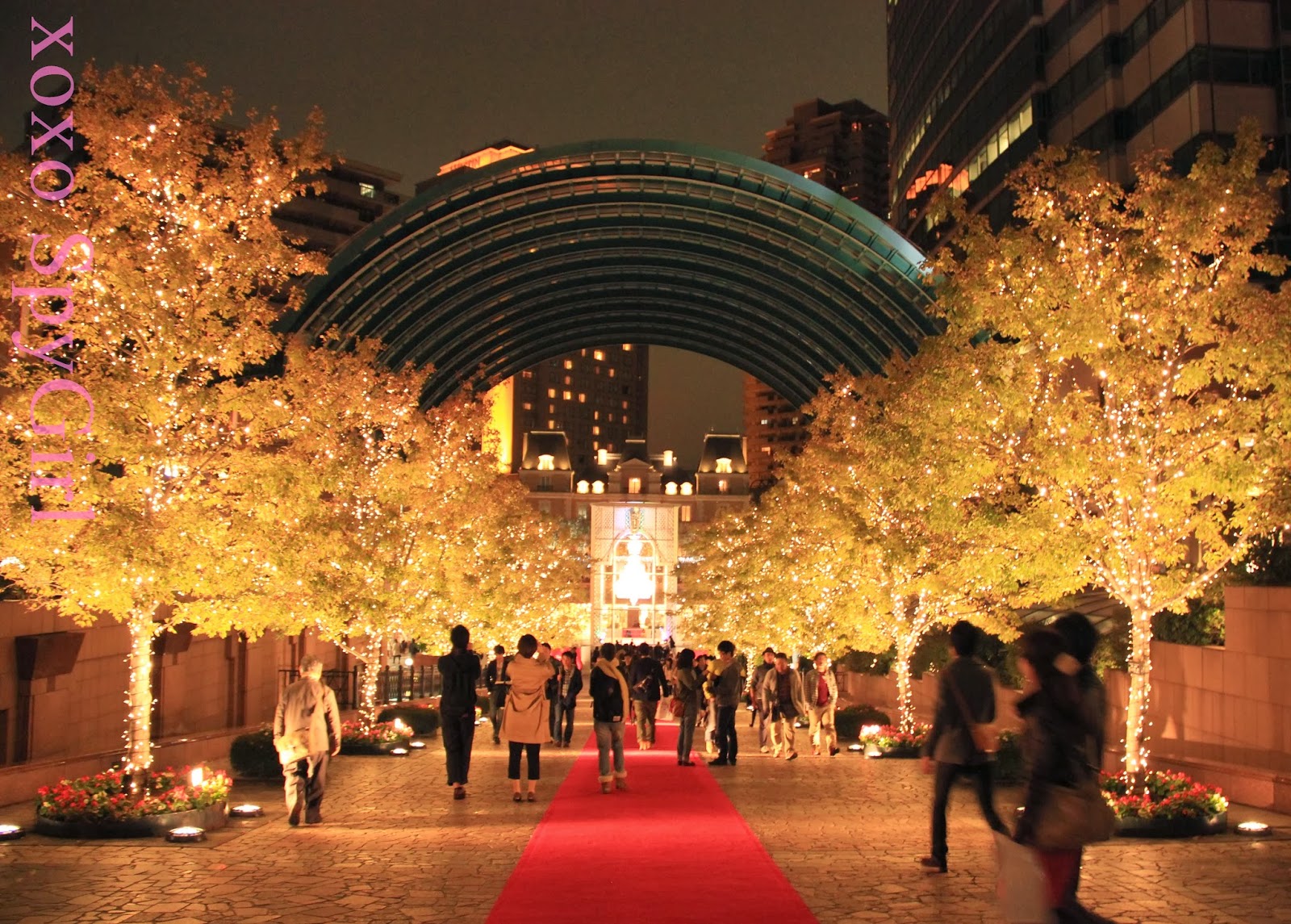
Ebisu is the only JR station that is dedicated to a beer brewery. The town has a good mix of old classic European-style building with the newer, taller towers surrounding a huge promenade which is rare in Japan. In winter, the Ebisu Garden Place transformed into a city of light with the annual Baccarat Eternal Lights display, featuring a lit-up walkway towards a big chandelier.


This promenade is decorated with an 8m tall Christmas tree while the whole area is surrounded by lighted-up trees. I am feeling all festive already ^^. The colour theme for this year is the same as the Tokyo tower, which is gold and red.


Since we are in Ebisu, there is absolutely no reason to skip the indoor Sapporo beer house and also the Ebisu beer museum. The beer museum is a must-see and must-try attraction complete with tours and sampling of beers on tap at the Tasting Lounge - yum! Did I mention that the admission is free?


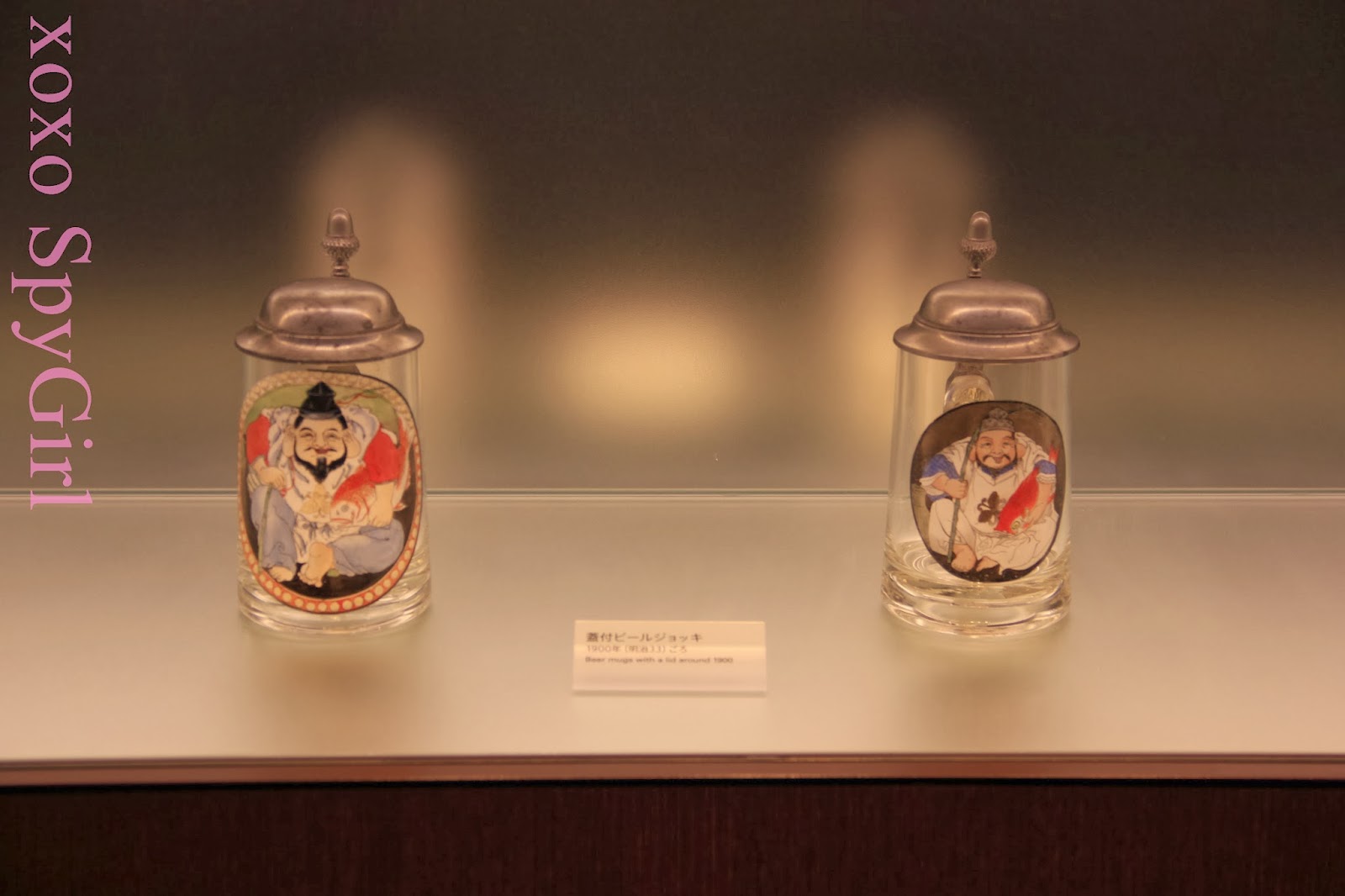
The museum collects its own advertising posters, beer mugs, gift boxes and other memorabilia over the years. You can do a self-tour, which takes between 10mins to half an hour.


But most people come here not only to learn about the beer's history, but to drink the beer at the Tasting lounge. While the beer in the Tasting lounge is not free (one beer costs about ¥300-500 and you can choose between 4 different varieties), it has a nice selection of light food. Our time was well-spent here.  I got myself a honey beer, which was delicious (sorry, no photo of the beer because I finished it before I could photograph it ^^).

This place is also surrounded by awesome restaurants such as the Sapporo beer garden and the Chateau Restaurant Taillevent-Robuchon, outdoor cafes and eateries and a shopping mall, Mitsukoshi but I didn't like shopping at this Mitsukoshi as it is quite a small one.

The bag adorned window
Anyway, it has been a very nice, but very cold night, which didn't pose any problem since my body has been happily warmed by the amount of beer I drank. Cheers!!!

Related Posts Plugin for WordPress, Blogger...